If you’re trying to narrow down the best things to do in Marrakesh, you’ve probably noticed that most guides send you to the same three or four landmarks and call it a day. I get it, those places earn their reputation. But Marrakesh has a design scene, a wellness culture, and day trips into completely different landscapes that rarely make it past the first paragraph of a typical guide.
This one covers all of it, grouped by what you’re actually choosing between: history, markets, gardens and art, wellness and food, and day trips out of the city. Pick a mix from each group and you’ll come home with a much better trip than the “hit every palace in one day” version. You’ll need three to four days at minimum to get through a solid chunk of this list, more if the day trips call to you, and if you’re extending your trip beyond Marrakesh, our Morocco 10 day itinerary covers where to go next.
Historic Landmarks and Architecture
Marrakesh’s medina is a UNESCO World Heritage Site, and most of the city’s landmark architecture sits inside its walls or just beyond them. These four are the essential, unmissable core of any list of things to do in Marrakesh. They get busy, they’re worth the entry fee, and they’re the places you’ll recognize from every photo of the city, for good reason. Start here before branching out into the rest of this guide, since everything else on this list is walkable or a short taxi ride from this cluster.
1. Bahia Palace
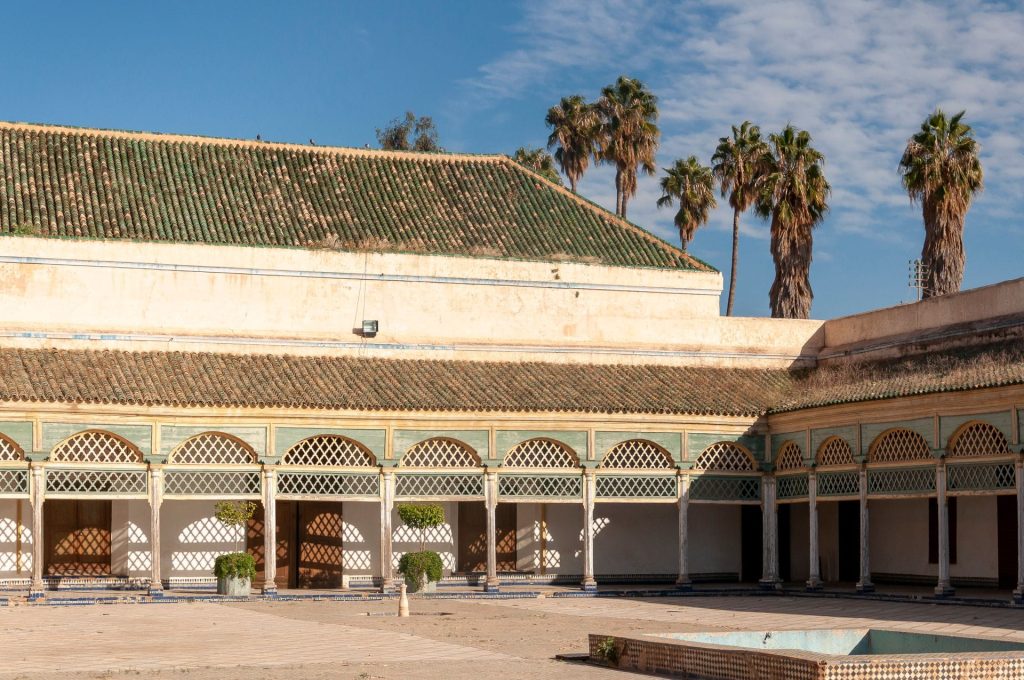
Bahia Palace was built in the 1860s and expanded further in the early 1900s, and only a fraction of its original 150 rooms are open to visitors today. That’s not a knock against it. The Grand Courtyard alone, with its marble floors and carved cedar galleries, makes the entry fee worth it in a way that the nearby El Badi Palace, now mostly ruins, doesn’t quite match. If you’re choosing between the two and only have time for one, this is the one to pick.
- Entrance fee: check current pricing on site, it’s inexpensive
- Opening hours: daily, roughly 9am to 5pm
- Best time to visit: early morning, before tour groups arrive between 9:30am and 1pm
2. Saadian Tombs
The Saadian Tombs sat sealed for centuries before being rediscovered in 1917, which is part of what makes them feel less staged than some of the city’s other sights. The Chamber of the Twelve Columns is the standout room, decorated with Italian marble and gold-lined arches that once housed the resting places of Saadian dynasty sultans. Sultan Ahmed al-Mansour’s mother has her own elaborate mausoleum nearby, while his wives and advisers were buried in simpler tombs scattered through the surrounding garden, a small detail that says a lot about how status worked in this dynasty.
Tour groups tend to arrive mid-morning, so if you can get here right when it opens, you’ll have a much quieter visit and more room to actually take in the detail on the tilework rather than shuffling past it in a crowd.
3. Ben Youssef Madrasa
Ben Youssef Madrasa was once the largest Quranic school in North Africa, and it no longer functions as one, which means you can wander it purely for the architecture. The carved cedar and zellij tilework covering the courtyard walls is the draw, and it’s made more striking by contrast: the student rooms surrounding it are almost completely bare, plain little cells built for studying rather than showing off. That gap between the ornate public spaces and the austere private ones is part of what makes the building interesting beyond just the craftsmanship.
Fewer guides send visitors here compared to Bahia Palace or the Tombs, so it tends to be a calmer stop even during peak hours, and it’s close enough to the central souks that it’s easy to fold into the same morning.
4. Koutoubia Mosque and Gardens
Koutoubia Mosque is the city’s largest and its most recognizable landmark, visible from much of the medina thanks to its tall minaret, which is said to have served as the model for other minarets built across the region. It’s worth being upfront about one thing some guides gloss over: non-Muslim visitors cannot enter the mosque itself. What you can do is walk the surrounding gardens and take in the minaret from outside, which is still a solid five or ten minutes well spent, especially if you’re passing by on your way somewhere else. Evening is a particularly good time to swing past, when the building is lit up against the sky.
Souks, Markets and Shopping
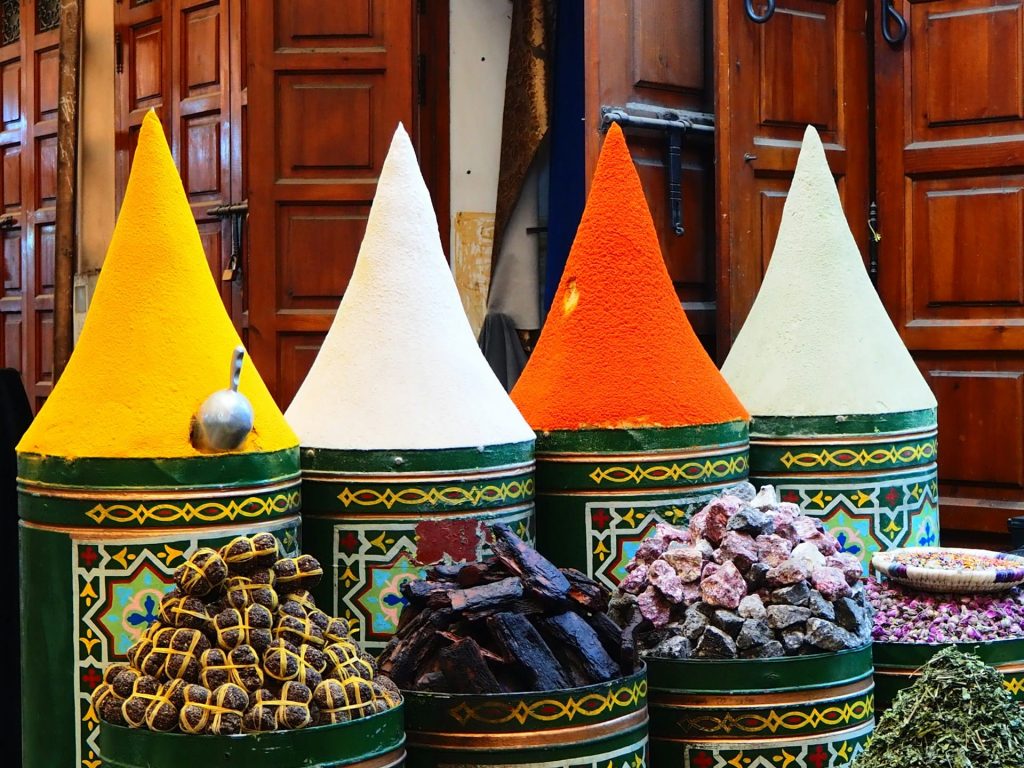
Shopping is one of the more consistent answers to what things to do in Marrakesh actually mean day to day, since the souks aren’t one market but a maze of specialized ones, each loosely organized around a specific craft. Haggling is expected everywhere here, and a common local norm is to start your counteroffer at around half the asking price. Keep that in your back pocket and the next few entries will make a lot more sense.
5. Get Lost in the Central Souks
Rather than treating “the souks” as one generic thing to wander through, it helps to know what you’re actually looking at. Souk Semmarine leads into a web of smaller ones: the metalwork souk rings with the sound of hammered tin and copper, the leather souk carries the smell of tanned hides, the dyers’ souk hangs brightly colored wool overhead like curtains, and the slipper souk is rows and rows of colorful babouches.
- What to look for: each souk is roughly organized by craft, so wandering with a general direction beats trying to cover all of them at once
- Tip: stalls closest to Jemaa el-Fna tend to be the most tourist-targeted and least flexible on price, walk a few streets deeper for better deals
6. Jemaa el-Fna by Day and Night
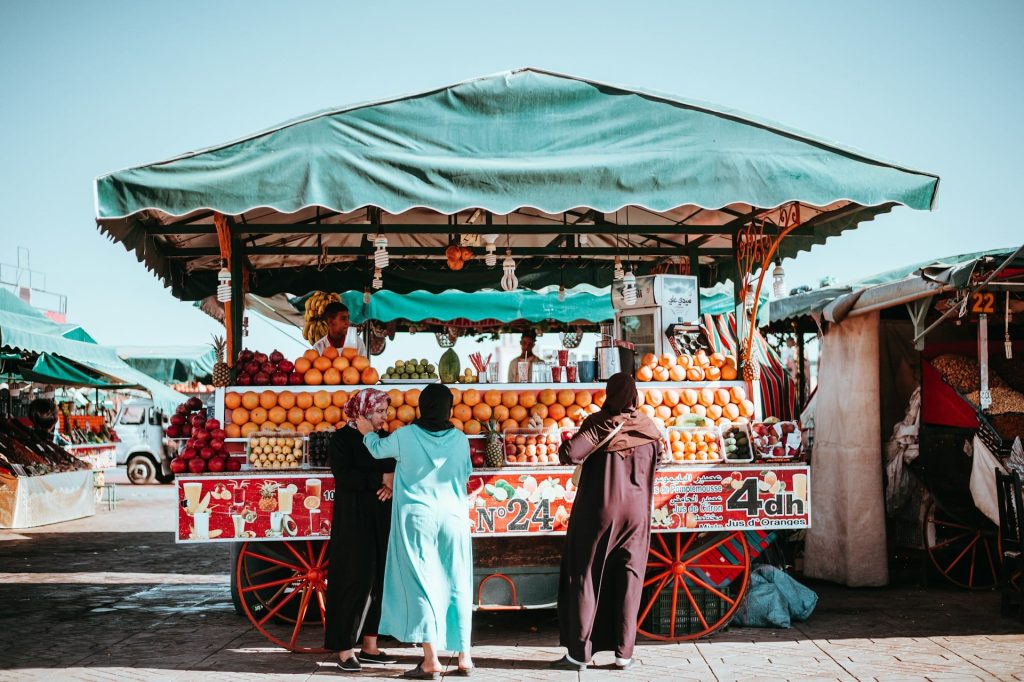
By day, Jemaa el-Fna is a fairly calm, market-like square, with juice stands, a handful of snake charmers, and vendors setting up for the evening. At sunset, it transforms completely: food stalls set up in rows, performers and storytellers gather crowds, and the whole place fills with smoke, noise, and the smell of grilled meat. If you want the best view of that transition, grab a table at a rooftop cafe overlooking the square right before the sun goes down, so you can watch the whole square come to life from above before heading down into it.
Eating at the food stalls is a genuine experience worth having, but be selective about it. Pick the stalls with the longest line of locals rather than the ones with the most aggressive touts waving you over, since that’s usually a reliable sign of which food is actually good. Expect to be approached by performers looking for tips if you stop to watch, and agree on a price upfront if you want a photo with any of them.
7. Sidi Ghanem Design District
If there’s one entry on this list that most guides skip entirely, it’s Sidi Ghanem. It’s an industrial area on the edge of the city that’s been quietly taken over by independent ceramic, textile, and fashion design studios, and it’s the closest thing Marrakesh has to a concept-store district. You’ll find local designers working in small showrooms rather than the tourist-facing shops that dominate the medina, which makes it a genuinely different kind of shopping trip if design or fashion is part of why you travel in the first place. Check out our fashion coverage for more on where style and travel overlap. One practical note: getting back from Sidi Ghanem by taxi can be a headache, since it’s outside the usual taxi routes. Arrange a driver’s number in advance rather than counting on hailing one on the street.
8. Bargain at a Flea Market
Bab el-Khemis, near the northern gate of the medina, is where a lot of the city’s old hotel and riad interiors end up after a renovation. It’s a genuinely different kind of shopping experience from the souks: less curated, more random, and full of the sort of finds you won’t see twice, from antique doors and windows to old lighting fixtures and secondhand furniture. If you’re the kind of traveler who likes digging through architectural salvage over buying something made for tourists, this is worth the trip out.
It’s spread across several blocks and takes a bit longer to reach than the central souks, so plan for a taxi there and back rather than trying to walk it from the medina.
Gardens, Art and Design
Marrakesh’s garden and art scene has grown well past Jardin Majorelle over the last decade. There’s a genuine contemporary art and design culture here now, spread across a few different neighborhoods, and it’s worth building real time around rather than treating it as a single stop on the way to somewhere else. This is also where the city’s creative side is easiest to see up close, if that’s part of what draws you to travel in the first place.
9. Jardin Majorelle and the YSL Museum
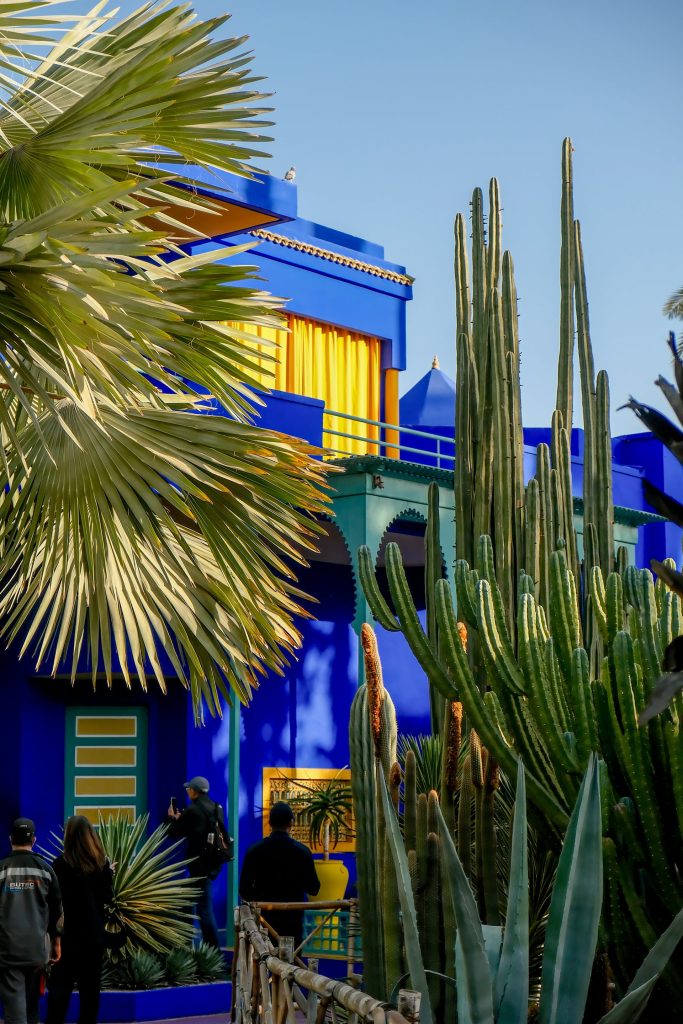
Jardin Majorelle was designed by French painter Jacques Majorelle in the 1920s and later restored by Yves Saint Laurent and Pierre Berge, whose influence is why the buildings are painted in that striking cobalt blue you’ve probably seen in photos. Inside, narrow paths wind between bamboo groves, cacti, and water features, all shaded by palms that make it noticeably cooler than the streets outside. The adjoining YSL museum covers Saint Laurent’s work and his long relationship with Morocco, and it’s a natural pairing with the garden rather than a separate trip.
This is the most-visited single site in the country, which is exactly why the booking detail matters more than most guides let on.
- Tickets must be booked online in advance, walk-up tickets are not available
- Best time slot: the first entry of the morning, before the garden fills up
- A combined ticket covers both the garden and the museum
10. The Secret Garden
Le Jardin Secret is a restored 16th-century garden split into two distinct sections: an Islamic garden built around strict symmetry and traditional water channels, and an exotic garden planted with species from around the world that feels more loosely arranged. The building itself passed through several sultans and political figures before falling into disrepair and being reopened to the public in 2016. It’s quieter than Jardin Majorelle and draws a fraction of the crowd, which makes it a solid alternative or add-on if you want a similar garden experience without fighting for space to take a photo. It’s also right in the middle of the medina, so it’s easy to fold into a souk day rather than a special trip.
11. Marrakesh’s Contemporary Art Scene
Marrakesh has become a genuine hub for North African contemporary art, and most guides never get past Jardin Majorelle to mention it. The Museum of African Contemporary Art Al Maaden, known as MACAAL, anchors the scene on the edge of the city, and a growing number of independent galleries around the Gueliz neighborhood fill in the rest, ranging from small artist-run spaces to larger exhibition venues. The city also hosts an annual contemporary art fair that draws collectors and galleries from across the continent, so if your trip lines up with it, the city fills up fast and it’s worth booking well ahead. Either way, an afternoon spent gallery-hopping here is worth it if you care about where Moroccan design and art are heading right now rather than just where they’ve been.
Wellness, Food and Nightlife
Moroccan hammam culture and Marrakesh’s food scene are as central to a trip here as any landmark. This group is the experiential half of the city, the part that’s less about sightseeing and more about slowing down and actually living in it for a few hours rather than moving from one entrance fee to the next.
12. Experience a Traditional Hammam
A hammam visit typically starts with a steam session to open your pores, followed by a scrub with black, olive-oil based soap and a rough exfoliating mitt called a kessa, then a mineral-rich clay called rhassoul to detoxify the skin before a final rinse. Where you go changes the experience a lot. A local hammam is cheap and genuinely authentic, but you’ll need to bring your own soap and mitt, and it’s not set up with English-speaking tourists in mind. A spa-style hammam costs more but is far more comfortable if it’s your first time and you’d rather not navigate the logistics solo.
- Local hammam: inexpensive, bring your own supplies, more authentic
- Spa hammam: pricier, guided, easier for first-timers
Is a hammam worth doing on a short trip? Yes, even if you only have three or four days. It’s one of the few experiences here that’s genuinely restorative rather than another site to check off, and a single session is usually enough to see what the fuss is about.
13. Take a Moroccan Cooking Class
A typical cooking class starts with a trip to a local market to pick out ingredients, where you’ll usually get a quick rundown of spices and produce you might not recognize, followed by hands-on preparation of several dishes, usually a tagine and a salad or two, and you generally leave with printed recipes to take home. Half-day classes cover the basics well; full-day versions add more dishes and a longer market tour if you want to go deeper into the cuisine rather than just come away with one recipe.
Ask around locally for a well-reviewed option when you arrive, since the best schools tend to shift over time and a specific recommendation here could easily be outdated by the time you visit.
14. Dine at a Rooftop Restaurant
Marrakesh has no shortage of rooftop restaurants and bars overlooking the medina, but quality and view vary more than you’d expect, and plenty of them are coasting on the view alone. It’s worth picking a specific place with decent reviews rather than just “any rooftop” near your riad, especially since prices tend to climb with the view whether the food matches or not.
Pair this with the Jemaa el-Fna sunset from earlier on this list: a rooftop table with a view over the square as the food stalls light up below is one of the better ways to end a day here, and booking a table in advance is worth it during busier months.
Day Trips Beyond the Medina
Marrakesh works well as a base for day trips into landscapes that look nothing like the city itself, all within an hour or two of the medina. If you’ve got four days or more, this is where the extra time goes, and all three of these can be done without giving up your riad or hotel room in the city.
15. Atlas Mountains Day Trip
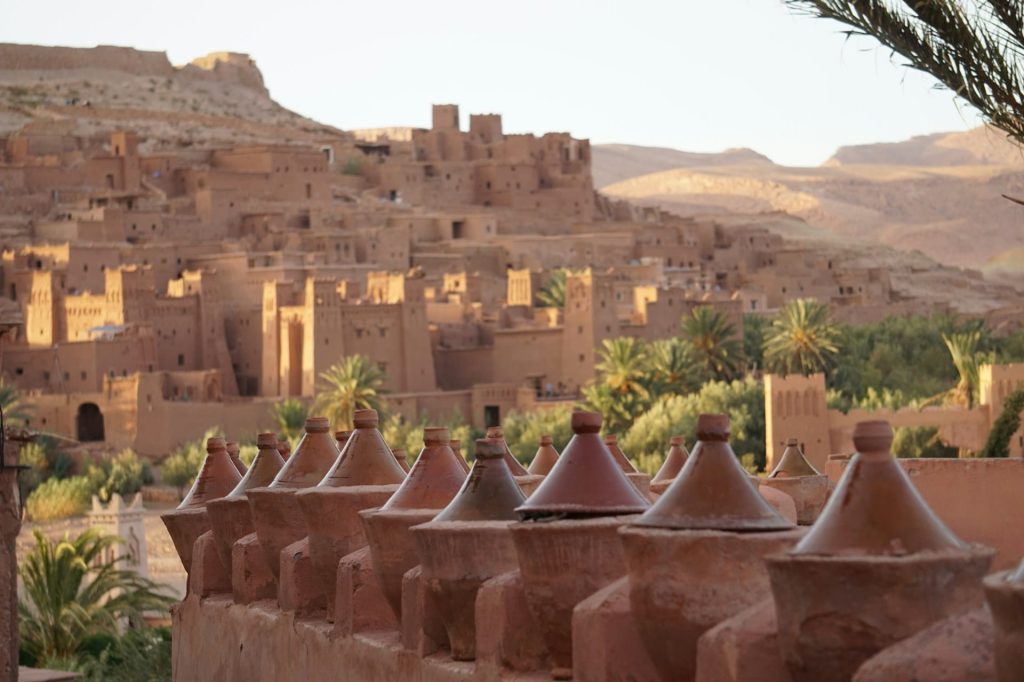
The Atlas Mountains rise close enough to the city that you can visit Berber villages, valleys, and hiking trails without needing to book a night away. It’s a genuinely different pace and landscape from the medina, cooler air, terraced fields, and mudbrick villages built into the hillsides, and a good reset if you need a break from the crowds and noise of the city center. Some tours stop at a local family’s home for tea or lunch along the way, which tends to be a highlight for a lot of visitors.
- Roughly an hour to ninety minutes from the city by road
- Options range from a guided group tour to hiring a private driver for a more flexible day
16. Sunrise Hot Air Balloon Ride
Balloon flights here launch early, often well before dawn, and drift over the countryside and toward the Atlas foothills as the sun comes up, usually followed by a breakfast stop after landing with a view back over where you just flew. It’s worth being honest about the trade-offs before you book: the wake-up call is brutal, and flights are weather-dependent, so don’t plan it for your only morning in the city in case it gets postponed and rescheduled to the following day.
17. Agafay Desert Overnight
Agafay is the closest desert-style landscape to Marrakesh, and it’s worth knowing upfront that it’s a stone desert, flat and rocky rather than sand dunes. If you’re picturing the Sahara, this isn’t quite that, though several guides let readers assume otherwise. What it does offer is a genuine one-night glamping experience without the long drive out to the real Sahara, which makes it a good fit if you’re short on time but still want a desert night under the stars. Camps typically include dinner, music around a fire, and stargazing away from the city’s light, which is reason enough on its own.
More Things to Do in Marrakesh: Practical Planning Tips
Once you’ve picked a few entries from the groups above, there are a handful of practical questions worth answering before you go.
What is the best time to visit Marrakesh?
The shoulder seasons, roughly March through May and September through November, are the sweet spot. Summer regularly climbs past 100°F in the medina’s tightly packed streets, which makes sightseeing genuinely uncomfortable, so it’s worth avoiding if you have any flexibility.
Is Marrakesh safe for solo female travellers?
Generally, yes. The most common issue you’ll run into is being called out to by market stall owners trying to get you into their shop, which is persistent but not dangerous, and firmly saying no and continuing to walk usually ends it. That said, standard city precautions still apply, and it’s worth checking your government’s current travel advisory for Morocco before you go rather than relying on any single blog post, including this one.
What should you wear in Marrakesh?
Modest, breathable clothing that covers your shoulders and knees is the general norm here, particularly around religious sites like the mosques and madrasas on this list.
How do you get around Marrakesh?
The medina itself is car-free and walkable, if a little maze-like at first, so expect to get turned around at least once and treat it as part of the experience rather than a problem to solve. Taxis are cheap and easy for anything outside walking distance, just agree on a price or ask for the meter before getting in, and day trips like the Atlas Mountains or Agafay Desert are best arranged through a driver or guided tour rather than public transport, which is limited outside the city.
For general trip-planning facts and current information before you go, the Moroccan National Tourist Office is a solid starting point beyond any single blog’s advice.
- Best season: March to May or September to November
- Minimum days: 3 to 4 for the core list, longer if you’re adding day trips
- Pack layers: mornings and evenings can be cool even when afternoons are warm
So, Which Things to Do in Marrakesh Make Your List?
There’s no single right way to spend a trip here. What tends to work best is picking one or two entries from each of the five groups above rather than trying to cram every landmark into one exhausting day. A palace morning, a souk afternoon, a hammam evening, that kind of rhythm gets you a much better sense of the city than a checklist ever will.
If you’re weighing which things to do in Marrakesh actually deserve a spot on your itinerary, start with one pick from each group and build outward from there. You’ll leave with a trip that feels like yours, not a copy of everyone else’s.